Stan State hosted its annual Social Justice in the Central Valley Conference from Oct. 22 to 25, focusing on this year’s theme, “Wealth, Water and Health.” The four-day event explored how structural inequities shape life across California’s Central Valley and how local action connects to global progress.
Among the keynote speakers was William Davis, director of the United Nations Information Center (UNIC) in Washington, D.C. Davis has spent much of his career explaining the work of the United Nations to U.S. audiences and encouraging young people to think globally. Before delivering his keynote address, he sat down with the Signal for an interview about international cooperation, sustainability and the role local communities play in global progress.
The importance of global collaboration
When asked what message he most wants students and young people in the United States to understand about the UN, Davis emphasized that global cooperation remains essential in addressing shared challenges.
He recalled a line from former U.S. Secretary of State Madeleine Albright that has stuck with him: “If the United Nations didn’t exist, you’d have to invent it.”
“There are challenges like humanitarian relief, peace and security and climate change that no country can handle alone,” Davis said. “America first doesn’t necessarily mean America alone. Sometimes nations need to collaborate, and the UN is built for that.”
From pandemic recovery to climate resilience, Davis believes global challenges require global solutions and the UN provides a forum for nations to find them together.
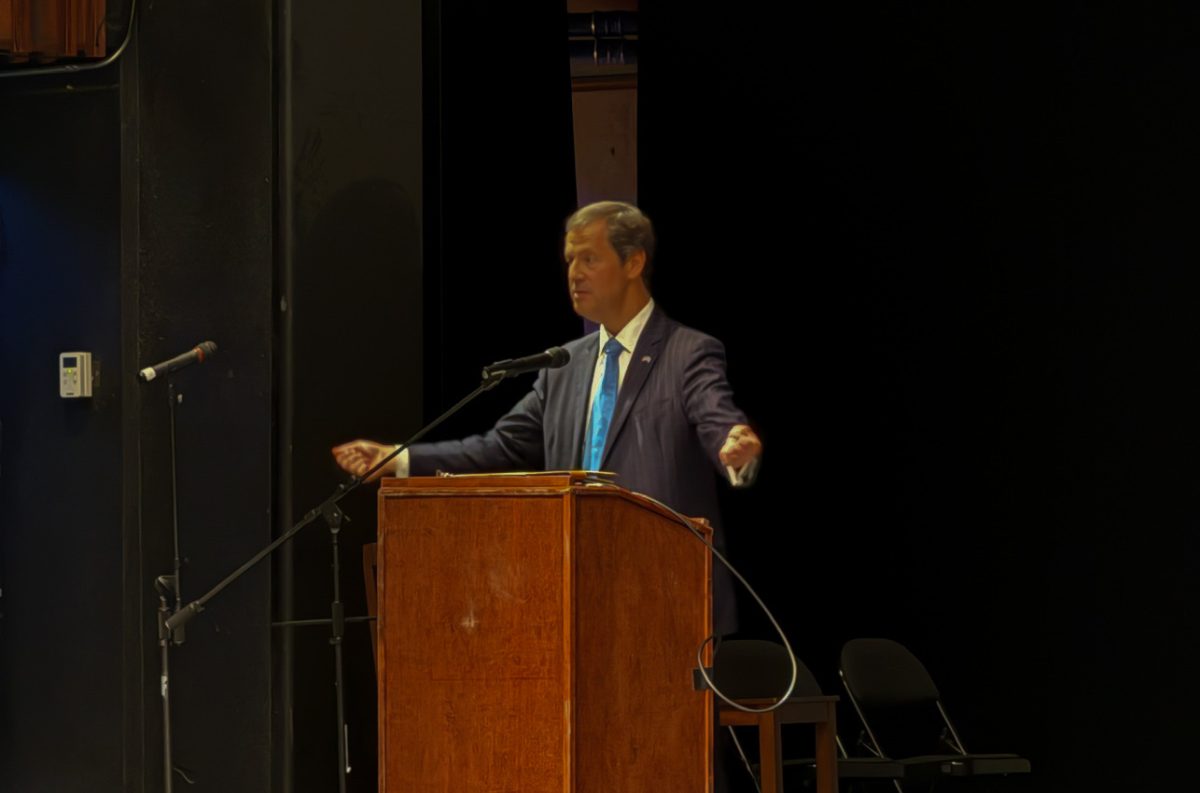
Wealth, water and health: connecting the local and global
This year’s conference theme resonated strongly with Davis, who said the three issues are deeply interconnected worldwide and nowhere is that more visible than in California’s Central Valley.
“Most of the food I eat probably originates here,” he said. “You need water for crops, power plants, data centers. In some parts of the world, water is so valuable it becomes a security issue.”
He noted that events thousands of miles away, such as global health crises or shifts in trade or climate patterns, can have immediate effects on communities like Turlock.
“Something that happens on the other side of the world can disrupt daily life here,” he said. “That’s why international cooperation isn’t just a diplomatic exercise. It’s a necessity.”
As he toured Stan State’s campus, Davis said he was impressed by the university’s commitment to sustainability, pointing out solar panels, electric vehicle charging stations and recycling bins as examples of small steps with lasting impact.
“Those are real things people can do,” he said. “They might seem small, but they add up. Universities like this one are showing what sustainable living can look like in practice.”
Turning global goals into local progress
Davis discussed the UN’s Sustainable Development Goals (SDGs), a framework of 17 global objectives adopted in 2015 to end poverty, protect the planet and promote prosperity by 2030.
“Fewer than 20 percent are on track to be met,” he said. “Half are making no progress or getting worse.”
Still, Davis said the goals remain as a powerful tool for accountability. While some national governments have wavered, local governments, universities and community organizations continue to use them to guide action.
“The idea behind the SDGs is out there,” he said. “Even if governments waver, people and local leaders are aware and committed. Just the fact that you asked about them gives me hope.”
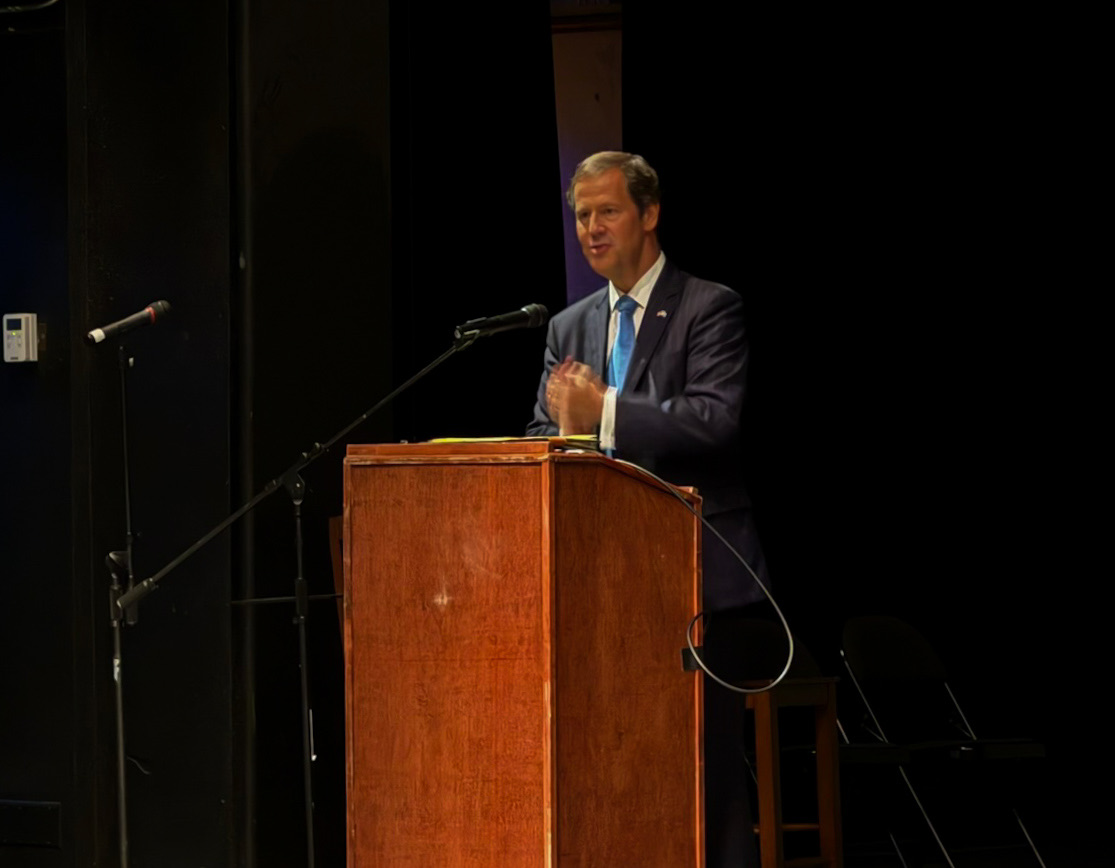
He pointed to campuses like Stan State as places where global goals become tangible through sustainability efforts, equitable education and responsible resource management. Davis believes real progress begins when communities take ownership of those goals and put them into practice.
Local leadership and sustainable development
Building on that point, Davis said the future of sustainable development depends less on international aid and more on collaboration driven by local leadership.
“The era of Western countries swooping in and telling others what to do is ending,” he said. “Local ownership and empowerment are the way forward.”
Highlighting public-private partnership as a key to this shift, “The private sector can be the engine of growth, but it needs support and guardrails. Public-private partnerships can drive innovation while keeping communities at the center.”
That approach, he added, applies as much to rural America as to developing nations. “Empowering local expertise and investing in regional solutions, that’s sustainable development in action.”
Balancing productivity and sustainability
The Central Valley’s challenge of balancing agriculture and environment, Davis said, reflects a global tension between growth and resource use.
“There’s always going to be some push and pull,” he said. “Ask the United States and Saudi Arabia about fossil fuels, and you’ll get very different answers from Western Europe or developing nations. Every country is trying to find its own balance.”
He said the SDGs help bridge those competing priorities by recognizing that social, economic and environmental progress are intertwined.
“You can’t have development if your population is uneducated or hungry,” he said. “You can’t grow sustainably if you’re polluting your environment or excluding whole communities. The SDGs connect all those pieces.”
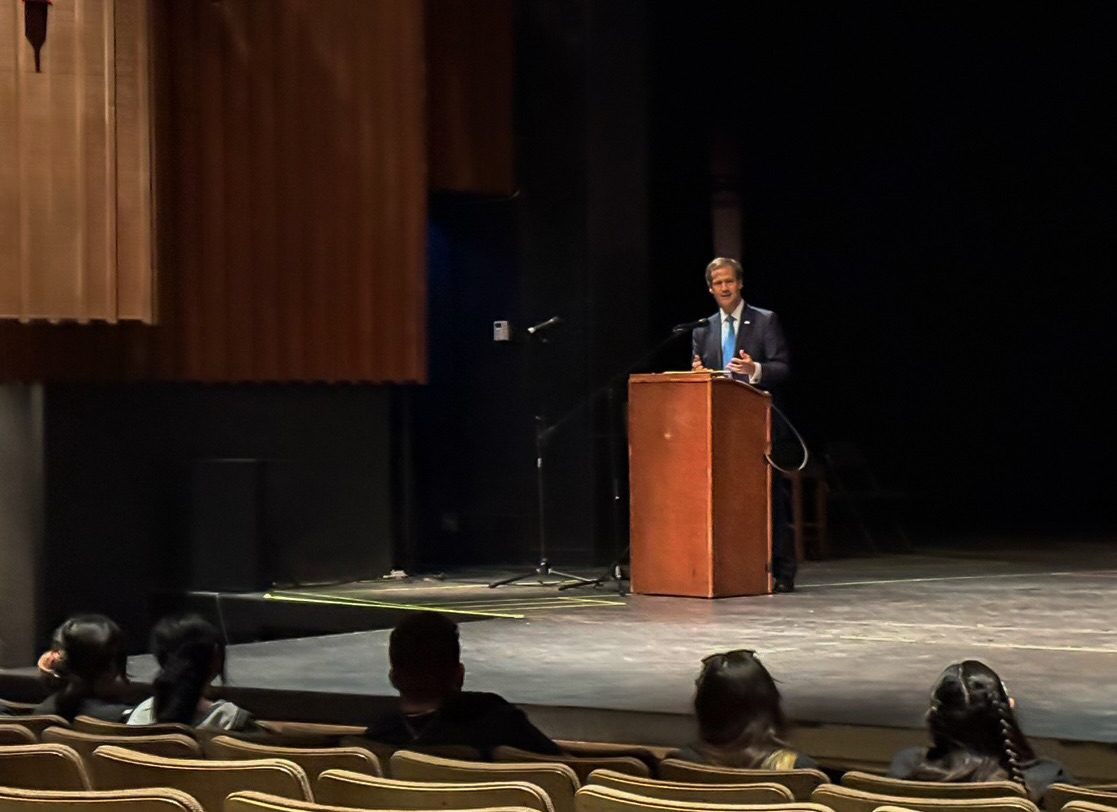
Inclusive growth and leaving no one behind
For Davis, inclusive development means ensuring progress benefits everyone.
“Inclusivity isn’t a fashionable word right now, but it’s essential,” he said. “A society can’t advance if it leaves entire groups feeling excluded or unheard.”
He warned that political unrest often arises when people feel left behind by economic and political systems. “Inclusive growth means making sure every community has a fair shot at advancing.”
Hope, concern and the next generation
As the conversation concluded, Davis reflected on what gives him hope and what makes him cautious about the future of global cooperation.
“Visiting places like Stan State gives me hope,” he said. “Students today are more globally aware than ever. The world is more connected, and that connectivity can lead to better understanding and cooperation.”
Even as he acknowledges the scale of global challenges, Davis emphasized that meaningful progress begins close to home. “We’re in a race between our capacity to cooperate and the challenges we face,” he said. “But education and awareness give us a real chance.”